
Vitamin
Vitamin B12
No plant makes B12. Neither does any animal — bacteria make it, and animals accumulate it. That single fact decides everything about who needs to pay attention to it.
What it does
B12 is needed to finish making red blood cells. Without it they come out large, few and poorly formed — megaloblastic anaemia — and the tiredness that follows is the same tiredness low iron causes, from a completely different mechanism.
It also maintains the myelin sheath around nerves. This is the half that matters most, because nerve damage from long-standing deficiency can become permanent, and it can develop while the blood picture still looks normal.
And it works with folate in the reaction that recycles homocysteine. Taking large amounts of folate can correct the anaemia of B12 deficiency while the nerve damage continues underneath — which is precisely why self-treating with a B-complex is unwise.
How much you need
| Who | Per day | Note |
|---|---|---|
| Infants, 0–6 months | 0.4 µg | Adequate Intake |
| Infants, 7–12 months | 0.5 µg | Adequate Intake |
| Children, 1–3 years | 0.9 µg | — |
| Children, 4–8 years | 1.2 µg | — |
| Children, 9–13 years | 1.8 µg | — |
| Adults | 2.4 µg | — |
| Pregnancy | 2.6 µg | — |
| Breastfeeding | 2.8 µg | — |
These are small numbers, and that is misleading. The issue with B12 is almost never how much is on the plate — it is whether the body can still take it off the plate.
From our own data
The foods highest in vitamin b12
Liver and shellfish are so far ahead of everything else that the list is barely a ranking. Note what is absent: no unfortified plant food appears, because none contains it.
- 1
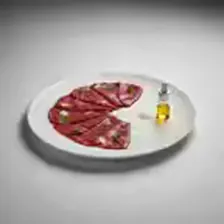 Veal liver, raw2,494% · DV
 - 2
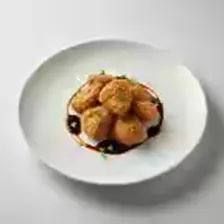 Lamb kidney, fried2,315% · DV
 - 3
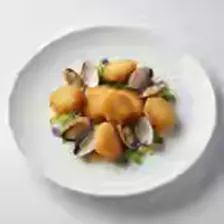 Clams, breaded and fried1,678% · DV
 - 4
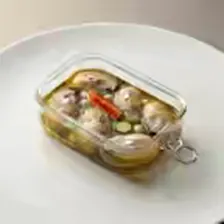 Oysters, canned866% · DV
 - 5
 Liver sausage837% · DV
 - 6
 Kippered herring779% · DV
 - 7
 Turkey giblets, simmered662% · DV
 - 8
 Octopus540% · DV
 - 9
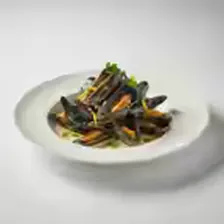 Mussels538% · DV
 - 10
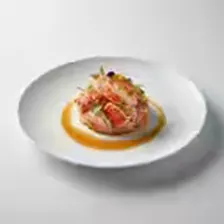 Alaska king crab, cooked479% · DV
 - 11
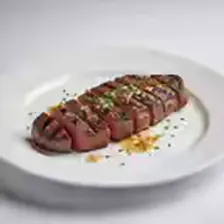 Beef skirt steak, lean, grilled341% · DV
 - 12
 Seafood sauce337% · DV
Per 100 g, from our copy of USDA FoodData Central, against a Daily Value of 2µg. Ranked by amount, not by how much of it your body actually takes up — read the next section before you act on the order.
The table above is per 100 g. The app weighs the portion you actually ate.
What helps, and what gets in the way
Helps
- Stomach acid and intrinsic factor, which free B12 from food and carry it across the gut
- Fortified foods and supplements, where the B12 is already free
- Spreading intake across the day — absorption per meal is capped at a couple of micrograms
Gets in the way
- Metformin, taken long term
- Proton pump inhibitors and H2 blockers, which reduce the acid needed to release it
- Atrophic gastritis, common with age, which reduces intrinsic factor
- Gastric or ileal surgery, which removes the tissue that produces or absorbs it
Spirulina, nori and fermented foods are often listed as plant sources. Most of what they contain are B12 analogues that occupy the receptor without doing the job, and some evidence suggests they can make matters worse rather than better. Anyone eating no animal foods needs a supplement or fortified foods — this is not a matter of dietary preference.
Who tends to fall short
Groups where intake or absorption is commonly lower than the reference. It is a list of populations, not a list of symptoms — it cannot tell you anything about yourself.
- Vegans and long-term vegetarians without fortified foods or a supplement
- Adults over about fifty, through falling stomach acid
- People on metformin or long-term acid suppression
- Breastfed infants of mothers who are deficient — stores at birth are low and run out fast
- People after bariatric surgery or with Crohn’s affecting the ileum
Cook it
Chicken liver and apple purée
From 7 months, once or twice a month at most
Ingredients
- 30 g chicken liver, trimmed
- 1 small sweet apple, peeled and cored
- 1 small potato, peeled and cubed
- 1 tsp unsalted butter or olive oil
- Water to loosen
Method
- 1Trim the liverCut away any pale connective tissue and green-tinged areas. Rinse and pat dry.
- 2Cook the potato and appleSimmer together in unsalted water for about 12 minutes until both are soft.
- 3Cook the liver throughGently in the butter for 5–6 minutes, turning, until no pink remains anywhere. Offal is one of the places where "just cooked" is not good enough for a baby.
- 4BlendEverything together, smooth, loosening with the cooking water. The apple is doing real work here — it takes the edge off a strong flavour.
Liver is extraordinarily rich in vitamin A as well as B12, and vitamin A accumulates. Twice a month is the usual ceiling for a small child, and liver is not recommended at all in pregnancy for the same reason. Check with your paediatrician before you start.
Sources
- NIH Office of Dietary Supplements — Vitamin B12
- Dietary Reference Intakes for Thiamin, Riboflavin, Niacin, Vitamin B6, Folate and Vitamin B12
- USDA FoodData Central
This page is education, not medical advice. It does not diagnose anything and it is not a substitute for a clinician who knows your history. If you think you are short of vitamin b12, the answer is a blood test and a conversation, not a supplement bought on the strength of an article.
Every food above, and 12,601 more, with the full panel — in the app.