
Vitamin
Thiamin
Beriberi appeared across Asia in the nineteenth century, spread by a piece of technology: the machine that strips the bran off rice. The vitamin is in the part that was being thrown away.
What it does
Thiamin is the cofactor for the enzymes that let a cell get energy from carbohydrate. Pyruvate dehydrogenase, the step that feeds sugar into the citric acid cycle, does not run without it — so the tissues that depend most on glucose, which are nerve and heart muscle, fail first.
That explains the two classic forms of deficiency. Dry beriberi is neurological: numbness, weakness, difficulty walking. Wet beriberi is cardiac: an enlarged heart and fluid retention.
Wernicke–Korsakoff syndrome is the same deficiency arriving fast, usually in the context of heavy alcohol use, and it can cause permanent memory damage. It is a medical emergency and it is treated with intravenous thiamin before anything else, including glucose — because giving glucose first consumes what little thiamin is left.
How much you need
| Who | Per day | Note |
|---|---|---|
| Infants, 0–6 months | 0.2 mg | Adequate Intake |
| Infants, 7–12 months | 0.3 mg | Adequate Intake |
| Children, 1–3 years | 0.5 mg | — |
| Children, 4–8 years | 0.6 mg | — |
| Children, 9–13 years | 0.9 mg | — |
| Men, 14 and over | 1.2 mg | — |
| Women, 19 and over | 1.1 mg | — |
| Pregnancy and breastfeeding | 1.4 mg | — |
Stores are small — a few weeks’ worth — which is why deficiency can develop faster than for most vitamins. There is no upper limit set, because excess is excreted readily and no harm from food or supplements has been established.
From our own data
The foods highest in thiamin
Pork is the standout among common foods. Beyond it: wholegrains, legumes, seeds and, in countries that mandate it, fortified flour — which is the single reason beriberi is rare in the West today.
- 1
 Sesame flour, full-fat224% · DV
 - 2
 Wheat germ, raw157% · DV
 - 3
 Lamb liver, fried131% · DV
 - 4
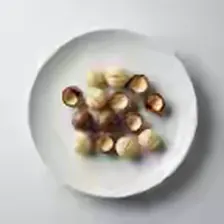 Macadamia nuts, raw100% · DV
 - 5
 Pork shoulder, lean, roasted93% · DV
 - 6
 Macaroni cheese, dry mix87% · DV
 - 7
 Winged beans, dry86% · DV
 - 8
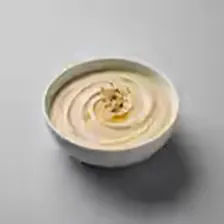 Tahini83% · DV
 - 9
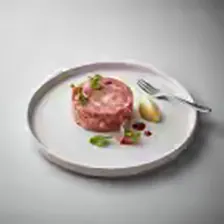 Ham, canned80% · DV
 - 10
 Soybeans, dry73% · DV
 - 11
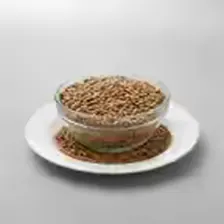 Lentils, dry73% · DV
 - 12
 Pistachios72% · DV
Per 100 g, from our copy of USDA FoodData Central, against a Daily Value of 1mg. Ranked by amount, not by how much of it your body actually takes up — read the next section before you act on the order.
The table above is per 100 g. The app weighs the portion you actually ate.
What helps, and what gets in the way
Helps
- Wholegrains rather than refined, since milling removes most of it
- Fortified flour and cereals, where the law requires them
- Legumes and seeds, which are dense in it
Gets in the way
- Alcohol, which impairs absorption and increases loss — the dominant risk factor
- Prolonged boiling, since thiamin is water-soluble and heat-sensitive
- Raw fish and shellfish in quantity, which contain thiaminase
- Long-term high-dose diuretics
Thiamin dissolves into cooking water and is destroyed by prolonged heat, so a food’s figure in a table is an upper bound rather than a promise. Sulphites, used as preservatives, also degrade it.
Who tends to fall short
Groups where intake or absorption is commonly lower than the reference. It is a list of populations, not a list of symptoms — it cannot tell you anything about yourself.
- People with alcohol use disorder — by a wide margin the commonest cause in wealthy countries
- People after bariatric surgery
- People with prolonged vomiting, including severe morning sickness
- People on long-term diuretics for heart failure
- Populations dependent on polished rice without fortification
Cook it
Pork and white bean stew with rosemary
Four, about an hour
Ingredients
- 500 g pork shoulder, cubed
- 2 tins white beans, drained
- 1 onion, diced
- 2 carrots, sliced
- 3 cloves garlic
- 1 sprig rosemary
- 600 ml stock
- 1 tbsp olive oil
Method
- 1Brown the pork in batchesTwo or three batches, not one. A crowded pan drops below searing temperature and the meat boils in its own juice, which is the difference between a stew that tastes of something and one that does not.
- 2Build the baseOnion and carrot in the same pan for eight minutes, scraping up everything the pork left behind. That fond is most of the flavour.
- 3Simmer low and longPork back in, stock, garlic and rosemary. Barely bubbling, lid ajar, forty-five minutes. A rolling boil makes shoulder tough rather than tender.
- 4Beans at the endLast ten minutes only — they are already cooked and longer turns them to mush. Serve with the broth, which holds thiamin that leached out of the meat.
Eat the liquid, not just the solids. Thiamin is water-soluble, and a stew keeps what a boil-and-drain would have poured away.
Sources
- NIH Office of Dietary Supplements — Thiamin
- Dietary Reference Intakes for Thiamin, Riboflavin, Niacin, Vitamin B6, Folate and Vitamin B12
- USDA FoodData Central
This page is education, not medical advice. It does not diagnose anything and it is not a substitute for a clinician who knows your history. If you think you are short of thiamin, the answer is a blood test and a conversation, not a supplement bought on the strength of an article.
Every food above, and 12,601 more, with the full panel — in the app.