
Mineral
Manganese
A cup of tea, a bowl of oats and a handful of nuts will cover a day’s requirement between them. Dietary deficiency in humans is so rare that most of what is known comes from experimental studies rather than from patients.
What it does
Manganese activates enzymes rather than being consumed by them. Manganese superoxide dismutase is the version of that antioxidant enzyme that works inside mitochondria, where the most reactive oxygen is produced — a location no other form covers.
It is also needed to build cartilage and bone matrix, and for enzymes in the urea cycle and in carbohydrate metabolism.
Requirements are small and plant foods are dense in it, which together explain why dietary deficiency essentially does not occur in people eating ordinary food.
How much you need
| Who | Per day | Note |
|---|---|---|
| Infants, 7–12 months | 0.6 mg | Adequate Intake |
| Children, 1–3 years | 1.2 mg | — |
| Children, 4–8 years | 1.5 mg | — |
| Boys, 9–13 | 1.9 mg | — |
| Girls, 9–13 | 1.6 mg | — |
| Men, 19 and over | 2.3 mg | — |
| Women, 19 and over | 1.8 mg | — |
| Pregnancy | 2.0 mg | — |
Every one of these is an Adequate Intake. There is no RDA for manganese because the evidence has never been strong enough to set one — the figures are what healthy populations happen to consume.
From our own data
The foods highest in manganese
Wholegrains, nuts, legumes and tea. Pineapple is the outlier people remember, and it genuinely is a good source.
- 1
 Wheat germ, raw578% · DV
 - 2
 Hazelnuts, blanched550% · DV
 - 3
 Teff, dry402% · DV
 - 4
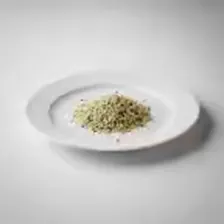 Hemp seeds, hulled330% · DV
 - 5
 Blue mussels, cooked296% · DV
 - 6
 Fireweed leaves, raw291% · DV
 - 7
 Poppy seeds291% · DV
 - 8
 Lemongrass, raw227% · DV
 - 9
 Oats214% · DV
 - 10
 Maple sugar192% · DV
 - 11
 Peanut flour, low fat184% · DV
 - 12
 Unsweetened baking chocolate181% · DV
Per 100 g, from our copy of USDA FoodData Central, against a Daily Value of 2mg. Ranked by amount, not by how much of it your body actually takes up — read the next section before you act on the order.
The table above is per 100 g. The app weighs the portion you actually ate.
What helps, and what gets in the way
Helps
- Wholegrains, which are the largest contributor in most diets
- Tea, which is unusually rich in it
- A varied plant-based diet, which makes deficiency almost impossible
Gets in the way
- High iron intake, which competes for the same transporter
- High calcium and phosphorus, modestly
- Phytate, as with the other trace minerals
Absorption is low — a few percent — and falls further as intake rises, which is a large part of why dietary excess is not a practical concern. Inhaled manganese is an entirely different matter: welders and miners exposed to manganese dust can develop a Parkinsonian syndrome, because inhalation bypasses the gut regulation altogether.
Who tends to fall short
Groups where intake or absorption is commonly lower than the reference. It is a list of populations, not a list of symptoms — it cannot tell you anything about yourself.
- Almost nobody, from diet alone
- People on long-term parenteral nutrition without it
- People with severe liver disease, where handling is impaired in both directions
Cook it
Overnight oats with pineapple and pecans
One, five minutes the night before
Ingredients
- 50 g rolled oats
- 120 ml milk or a fortified plant drink
- 2 tbsp yoghurt
- 80 g fresh pineapple, diced
- 1 tbsp pecans, chopped
- 1 tsp chia seeds
Method
- 1Use rolled, not instantInstant oats are pre-cooked and collapse into paste overnight. Rolled oats soften and keep their shape.
- 2Combine everything but the nutsOats, milk, yoghurt, chia and half the pineapple in a jar. Stir properly — chia clumps if it is not dispersed before it starts absorbing.
- 3Overnight in the fridgeSix hours minimum. The chia thickens it and the oats do the rest.
- 4Finish in the morningThe rest of the pineapple and the pecans on top. Adding them the night before makes the fruit weep and the nuts go soft.
Oats, pecans and pineapple are three of the better manganese sources, which is a slightly absurd thing to say about a breakfast that was chosen because it is good.
Sources
- NIH Office of Dietary Supplements — Manganese
- Dietary Reference Intakes for Vitamin A, Vitamin K, Manganese and others
- USDA FoodData Central
This page is education, not medical advice. It does not diagnose anything and it is not a substitute for a clinician who knows your history. If you think you are short of manganese, the answer is a blood test and a conversation, not a supplement bought on the strength of an article.
Every food above, and 12,601 more, with the full panel — in the app.